
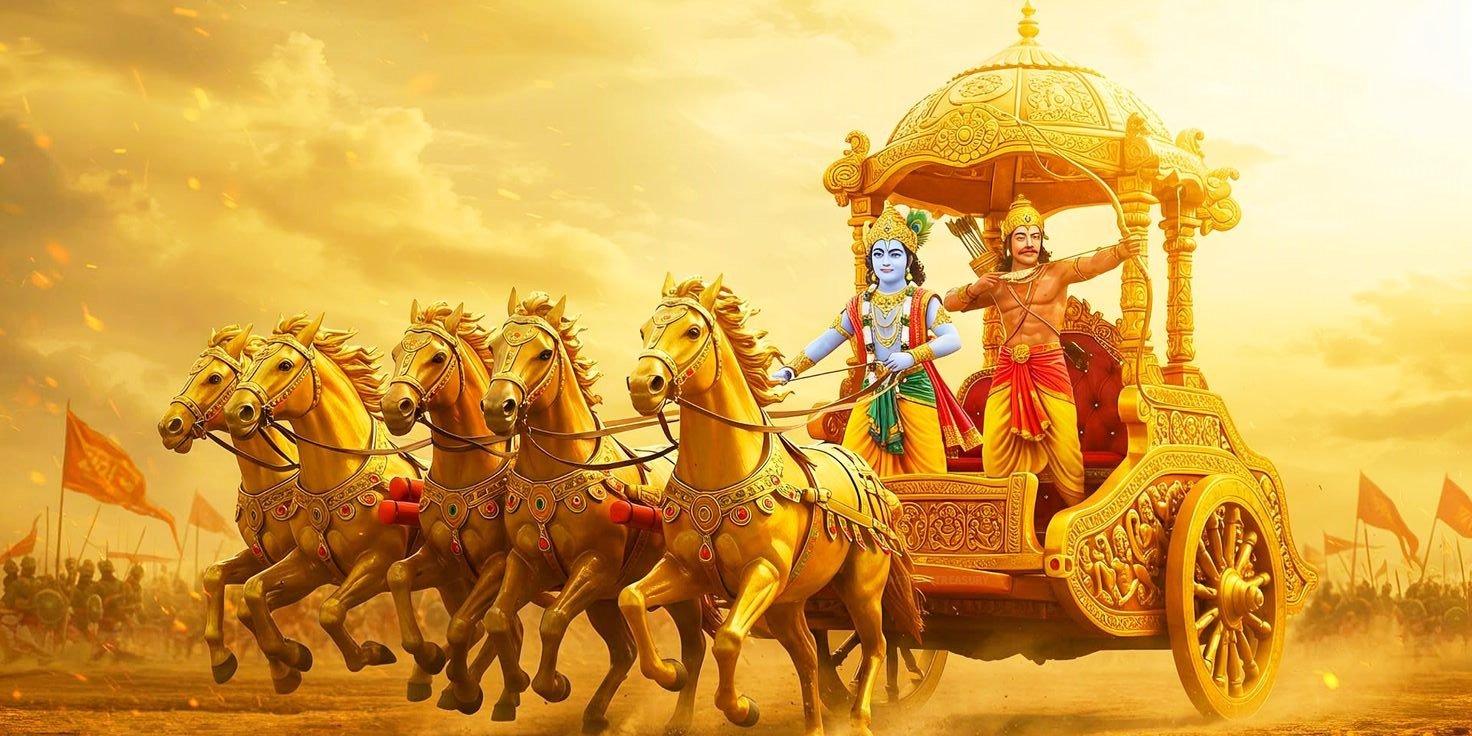
What Is the Srimad Bhagavad Gita?
The Srimad Bhagavad Gita, often called the Gita, is a revered dialogue between Bhagavan Shri Krishna and Arjuna, set on the battlefield of Kurukshetra just before the Mahabharata war begins. It appears within the Bhishma Parva of the Mahabharata. Faced with the prospect of fighting relatives, teachers and friends, Arjuna experiences profound grief and moral confusion. Krishna responds by guiding him through questions of duty, the nature of the Self, disciplined action, devotion and spiritual understanding.
The Gita speaks to a difficult human question: how can we act responsibly when life presents conflict, uncertainty and competing duties? Its answers are interpreted in different ways across Hindu philosophical and devotional traditions, making careful reading and comparison valuable.
Structure: Eighteen Chapters of Yoga
The Gita is commonly presented as eighteen chapters containing about 700 verses. Each chapter is traditionally described as a form of yoga—a disciplined path, practice or way of understanding. Chapter names and some transliterations vary between editions and translations.
- Arjuna Vishada Yoga: Arjuna's grief and moral crisis.
- Sankhya Yoga: foundational teachings on the Self, wisdom and steady understanding.
- Karma Yoga: action, responsibility and freedom from possessive attachment to results.
- Jnana Karma Sannyasa Yoga: knowledge, action and the meaning of spiritual discipline.
- Karma Sannyasa Yoga: renunciation and action understood in relation to inner freedom.
- Dhyana Yoga: meditation, self-mastery and a balanced mind.
- Jnana Vijnana Yoga: knowledge of the Divine and deeper realisation.
- Akshara Brahma Yoga: the imperishable, remembrance and the ultimate goal.
- Raja Vidya Raja Guhya Yoga: profound knowledge, faith and devotion.
- Vibhuti Yoga: recognising divine glory throughout existence.
- Vishvarupa Darshana Yoga: Arjuna's vision of Krishna's universal form.
- Bhakti Yoga: the path and qualities of devotion.
- Kshetra Kshetrajna Vibhaga Yoga: the field, the knower and discernment.
- Gunatraya Vibhaga Yoga: understanding sattva, rajas and tamas.
- Purushottama Yoga: the Supreme Person and the nature of worldly existence.
- Daivasura Sampad Vibhaga Yoga: divine and destructive qualities of character.
- Shraddhatraya Vibhaga Yoga: faith and how it is shaped by the three gunas.
- Moksha Sannyasa Yoga: duty, discernment, renunciation and liberation.
Central Teachings of the Gita
Dharma and responsible action
Dharma involves responsibility and right conduct, but applying it may require discernment rather than an easy formula. Krishna helps Arjuna examine his situation, motives and obligations instead of acting only from fear, grief or confusion.

Karma Yoga: act without possessive attachment
The Gita teaches that people should carry out their responsibilities sincerely without making personal reward the sole purpose of action. Bhagavad Gita 2.47 is widely discussed in this context: it distinguishes responsibility for one's actions from a claim to control their results. This teaching is not an invitation to carelessness; it encourages committed effort while recognising that outcomes are not entirely within our control.

Jnana: knowledge and discernment
The Gita invites reflection on the difference between the changing body and circumstances and the enduring Self (atman). It encourages learners to question confusion, cultivate discernment and seek understanding through study, reflection and guidance.

Bhakti: devotion and relationship with the Divine
Devotion is a major theme, especially in chapters 9 and 12. The Gita presents remembrance, trust, sincerity and loving dedication as meaningful spiritual practices. Traditions differ in how they explain the relationship between the individual Self, the Divine and liberation.

Dhyana: steadiness of mind
Chapter 6 discusses meditation, moderation and training the mind. The teaching recognises that attention wanders; practice and patience help bring it back. It also recommends balance in daily habits rather than extremes.
The three gunas and inner growth
Chapters 14 and 17 examine sattva (clarity and harmony), rajas (activity and desire) and tamas (inertia and confusion). These qualities are used to reflect on patterns of thought, action, faith and conduct. The text invites self-examination and spiritual growth rather than simplistic labelling of other people.
Verses Often Studied
- 2.47: responsibility for action and non-attachment to its fruits.
- 4.7–8: Krishna's teaching about the Divine manifestation when dharma declines.
- 6.5: the importance of uplifting and disciplining oneself.
- 12.13–20: qualities associated with a devoted person, including compassion, patience and equanimity.
- 18.63: Krishna invites Arjuna to reflect fully on the teaching and then act according to his considered understanding.
These references are starting points for study, not substitutes for reading the surrounding verses. Translations and commentaries may explain key Sanskrit terms differently, so compare reliable editions and consider the context of each passage.
How to Study the Bhagavad Gita
- Read a chapter in sequence before focusing on individual quotations.
- Compare a trustworthy translation with the Sanskrit text when possible.
- Note the question Arjuna raises and how Krishna responds in context.
- Reflect on karma, jnana, bhakti and dhyana as connected themes rather than isolated slogans.
- Consult traditional commentaries from different schools, recognising where their interpretations differ.
- Apply the teachings thoughtfully and ethically; do not use a verse to dismiss another person's suffering or to avoid responsibility.
Read the Srimad Bhagavad Gita Chapterwise
Continue from Arjuna's first questions through Krishna's concluding guidance in our chapterwise reading collection. The chapter index includes summaries and reading links to help you study the text in sequence.