
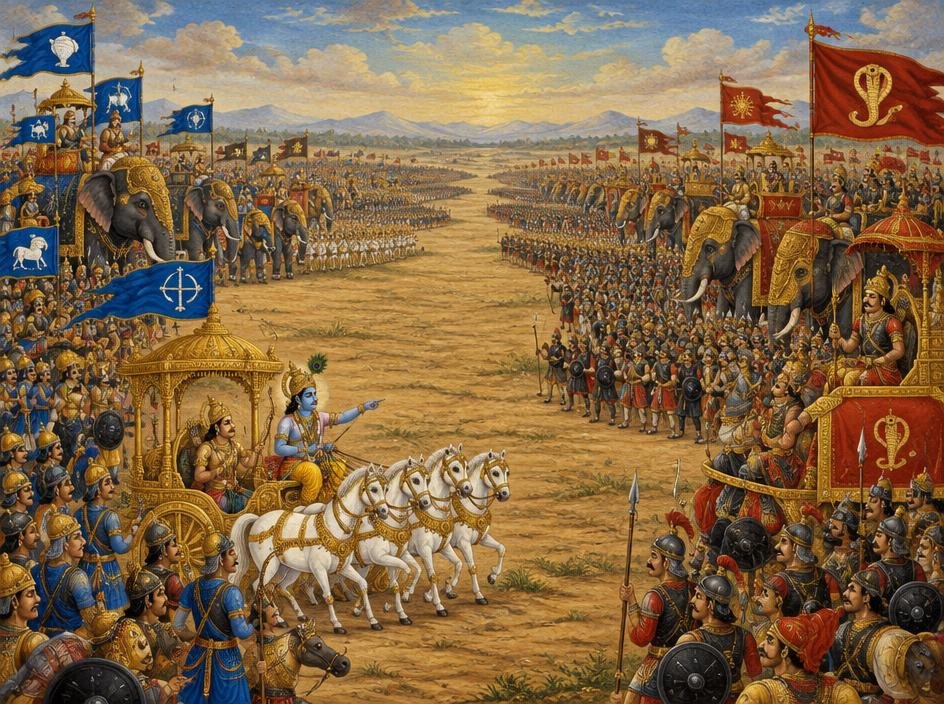
The Great War of Kurukshetra
The Mahabharata, traditionally attributed to Maharishi Ved Vyasa, is one of India's greatest epics. It tells the story of the Pandavas and Kauravas, whose rivalry culminated in the eighteen-day war of Kurukshetra.
Beyond a struggle for a kingdom, the epic explores dharma, justice, loyalty, ambition, sacrifice and the consequences of human choices.
1. Why Did the War Begin?
Jealousy, political rivalry and Duryodhana's refusal to restore the Pandavas' rightful share of the kingdom deepened the conflict. The manipulated dice game, Draupadi's humiliation and the Pandavas' years of exile became decisive events in the growing dispute.
Lord Krishna attempted to negotiate peace, but Duryodhana refused a settlement. Diplomacy failed, and the rival armies assembled at Kurukshetra.
2. Krishna's Teachings to Arjuna
Before the battle, Arjuna was overcome by grief at the thought of fighting relatives, teachers and friends. Krishna's counsel forms the Bhagavad Gita, which explores the eternal Self, dharma, disciplined action and devotion.
These teachings helped Arjuna confront his moral crisis and understand the responsibility before him.
3. The Eighteen Days of War
Bhishma commanded the Kaurava army during the first ten days. After his fall, Dronacharya took command. The thirteenth day brought the tragic death of Abhimanyu inside the Chakravyuha formation.
Arjuna later fulfilled his vow against Jayadratha. Drona fell after hearing a carefully constructed message about Ashwatthama. Karna subsequently led the Kaurava forces and fought Arjuna in a decisive encounter on the seventeenth day.
On the eighteenth day, the remaining Kaurava forces were defeated. Bhima fought Duryodhana in a mace duel and struck his thigh, bringing the central conflict to its decisive end.
4. Karna: The Tragedy of a Great Warrior
Karna's life was shaped by questions of identity, generosity, honour and loyalty. His friendship with Duryodhana placed him on the opposing side from Arjuna, his own brother by birth. His death remains one of the epic's most tragic turning points.
5. How Did the War Culminate?
The Pandavas emerged victorious, but the victory came at an immense cost. Bhishma, Drona, Karna, Abhimanyu, Duryodhana and countless other warriors had died.
Even after Duryodhana's defeat, the tragedy continued. During the night, Ashwatthama attacked the Pandava camp and killed Draupadi's sleeping sons and other warriors. The revenge attack deepened the suffering of the survivors.
Yudhishthira eventually assumed the throne of Hastinapura. Yet he was troubled by the destruction and loss caused by the war. The epic continues beyond the battlefield, exploring kingship, responsibility, renunciation and the limits of worldly power.
6. Five Timeless Lessons
- Unchecked pride and ambition can destroy families and kingdoms.
- Injustice can have consequences far beyond the original wrongdoing.
- Dharma requires discernment when duties conflict.
- Loyalty must be balanced with moral responsibility.
- Victory cannot erase the human cost of destructive choices.
Conclusion: Beyond Victory and Defeat
The Mahabharata culminates in the Pandavas' victory, but its deeper message lies in the consequences of human choices. Through Krishna's teachings, Karna's tragedy, Yudhishthira's grief and the destruction of the Kuru dynasty, the epic invites us to reflect on justice, self-restraint and righteous living.
The battlefield belongs to an ancient epic, but the struggle between selfish desire and dharma remains relevant in our lives today.