
Spiritual stories
Yuddha Kanda: The Battle of Lanka and Rama's Victory
The sixth book of the Valmiki Ramayana tells of Vibhishana's refuge, the building of the bridge to Lanka, the great war, the fall of Kumbhakarna and Indrajit, Ravana's defeat and Rama's return to Ayodhya.
Introduction: The Book of War
Yuddha Kanda, the sixth book of the Valmiki Ramayana, narrates the campaign against Lanka and the battle between Rama's allies and Ravana's forces. Hanuman has returned from Lanka with news of Sita, and the search has become a mission to reach her and bring her home.
The Kanda includes diplomacy and counsel as well as combat. Vibhishana urges Ravana to return Sita and later seeks refuge with Rama. Nala constructs the bridge across the ocean, the armies cross to Lanka, and a succession of battles leads to Ravana's defeat and Rama's coronation in Ayodhya.
Ravana Rejects Counsel and Vibhishana Seeks Refuge
In Lanka, Vibhishana repeatedly advises Ravana to return Sita and avoid a disastrous war. He warns that Ravana's actions are unjust and that Rama's strength should not be underestimated. Ravana refuses the counsel and insults his brother, who leaves Lanka.
Vibhishana approaches Rama and asks for refuge. Some of Rama's allies are cautious, wondering whether he may be a spy. Rama declares his commitment to protect one who sincerely seeks shelter. Vibhishana is welcomed and provides valuable knowledge about Lanka and Ravana's forces.
The Ocean and the Building of Rama Setu
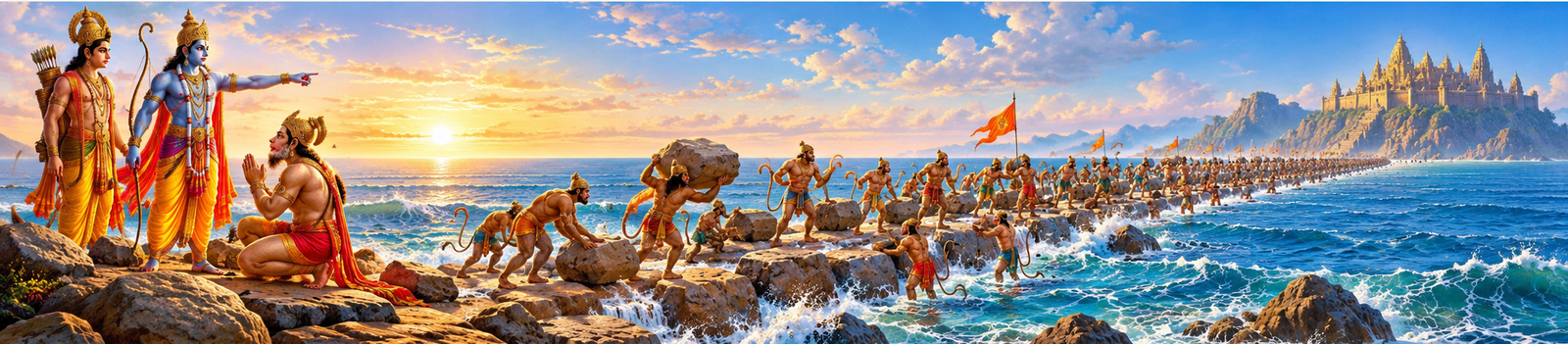
Rama's army reaches the southern ocean, but the water presents a formidable barrier. Rama first seeks a way across through prayer and appeal to the ocean. When the ocean does not respond, Rama prepares to use force. The ocean deity then appears and explains how a crossing may be made.
Nala, who possesses the knowledge needed for the task, is appointed to construct the bridge. The vanara forces gather materials and build the causeway across the sea. The army crosses to Lanka, bringing the campaign to the island's shores.
The Siege of Lanka and the First Battles
Rama's forces approach the fortified city and arrange their positions around its gates. Before the fighting reaches its full intensity, messages and challenges pass between the two sides. Ravana remains unwilling to surrender Sita, despite further opportunities to make peace.
The battle begins with fierce encounters between vanara warriors and rakshasa commanders. Indrajit uses powerful weapons, including serpent arrows, to bind Rama and Lakshmana. Garuda's arrival releases the brothers from the serpent bonds and restores hope to the army.
Kumbhakarna Enters the War
As Ravana's forces suffer losses, Kumbhakarna is awakened and brought into the conflict. He rebukes Ravana for the conduct that has brought Lanka into danger, yet chooses to fight for his brother and his kingdom.
Kumbhakarna causes great destruction among the vanara forces. Rama confronts him and eventually brings him down. His death is a major turning point in the war and deepens Ravana's grief and anger.
Indrajit's Deceptions and the Battle at Nikumbhila
Indrajit, Ravana's formidable son, uses illusion and powerful weapons to confuse the opposing army. In one episode he creates the appearance that Sita has been killed, causing great distress among Rama's allies. Vibhishana explains that the report is a deception and reveals the importance of stopping Indrajit's ritual at Nikumbhila.
Lakshmana, accompanied by Vibhishana and supported by the vanara warriors, confronts Indrajit. After a fierce battle, Lakshmana kills him. The fall of Ravana's most powerful son leaves the king of Lanka increasingly isolated.
Hanuman and the Life-Restoring Herbs
The war repeatedly leaves warriors severely wounded. When Lakshmana and others are struck down, Hanuman is sent to obtain life-restoring herbs from the distant mountain. Unable to identify the required plants, he brings the mountain itself so that the healer can prepare what is needed.
Hanuman's journeys to obtain the herbs become a celebrated expression of urgency and devotion. His strength is matched by his willingness to act without hesitation when the lives of his companions are at stake.
Rama and Ravana Face One Another
After the deaths of Kumbhakarna and Indrajit, Ravana enters the battlefield himself. The conflict reaches its climax in the duel between Rama and the king of Lanka. The struggle is fierce, and the gods watch as the two warriors exchange powerful weapons.
Sage Agastya teaches Rama the Aditya Hridayam, a hymn in praise of the Sun, before the decisive encounter. Rama gathers his resolve and continues the battle. At last, he releases a powerful arrow and Ravana falls.
Ravana's Funeral and Vibhishana's Coronation
After Ravana's death, Vibhishana is overcome by grief and hesitation about performing the final rites for his brother. Rama reminds him that enmity ends with death and that the fallen warrior deserves the rites due to him. Vibhishana performs the funeral ceremonies.
Vibhishana is then installed as king of Lanka. The episode shows that the victory is not an invitation to cruelty or revenge. Rama recognises the dignity of the defeated and establishes a new ruler who had opposed Ravana's injustice.
Sita's Reunion with Rama
Hanuman is sent to tell Sita that Ravana has been defeated. Vibhishana brings her to Rama. The meeting is emotionally difficult, and the text records a painful exchange in which Rama speaks harshly and Sita responds by asserting her integrity.
Sita enters the fire, and Agni returns her, affirming her purity. The episode has been interpreted in many ways across centuries of commentary and retelling. Readers should recognise both its place in the received Valmiki narrative and the serious ethical questions it raises.
The Return to Ayodhya and Rama's Coronation
With the conflict concluded, Rama, Sita and their companions prepare to return to Ayodhya. They travel in the Pushpaka aerial chariot, and Rama points out places associated with the journey and the events of the exile. Hanuman is sent ahead to inform Bharata that Rama is returning.
Bharata welcomes Rama, and the people of Ayodhya celebrate the return. Rama is crowned king, bringing the central narrative of the Ramayana to a moment of restoration and public joy.
Key Characters and Teachings
Rama leads the campaign while remaining committed to the protection of those who seek refuge. Vibhishana chooses truth over loyalty to an unjust ruler. Hanuman's service sustains the army; Lakshmana confronts Indrajit; Sugriva, Angada, Jambavan and the vanara leaders contribute to the campaign. Ravana, Kumbhakarna and Indrajit represent formidable power directed toward a destructive cause.
Yuddha Kanda explores the consequences of pride, the value of wise counsel, the duty to protect, the ethics of refuge and the responsibilities that remain even after victory. It also raises difficult questions about war, justice, honour and the treatment of the defeated.
Yuddha Kanda in the Wider Ramayana
Yuddha Kanda brings the search for Sita to its dramatic conclusion and narrates Rama's return and coronation. In many readings, this is the natural culmination of the main epic story. The received seven-book tradition, however, continues with Uttara Kanda, which presents later events and raises further questions about kingship, public opinion and personal duty.
This article follows the principal narrative of the Valmiki Yuddha Kanda. Some details familiar from later devotional retellings—such as the squirrel helping build the bridge or particular versions of the Sanjeevani episode—are not narrated in the same form in the Sanskrit text.