
Spiritual stories
Kishkindha Kanda: Friendship, Hanuman and the Search for Sita
The fourth book of the Valmiki Ramayana follows Rama's alliance with Sugriva, the conflict with Vali, the restoration of Kishkindha's kingdom and the search parties sent across the world to find Sita.
Introduction: The Kanda of Alliance and Search
Kishkindha Kanda, the fourth book of the Valmiki Ramayana, begins as Rama and Lakshmana continue searching for Sita after her abduction. Their journey brings them to the region of Lake Pampa and Mount Rishyamuka, where they meet Hanuman and the exiled vanara prince Sugriva.
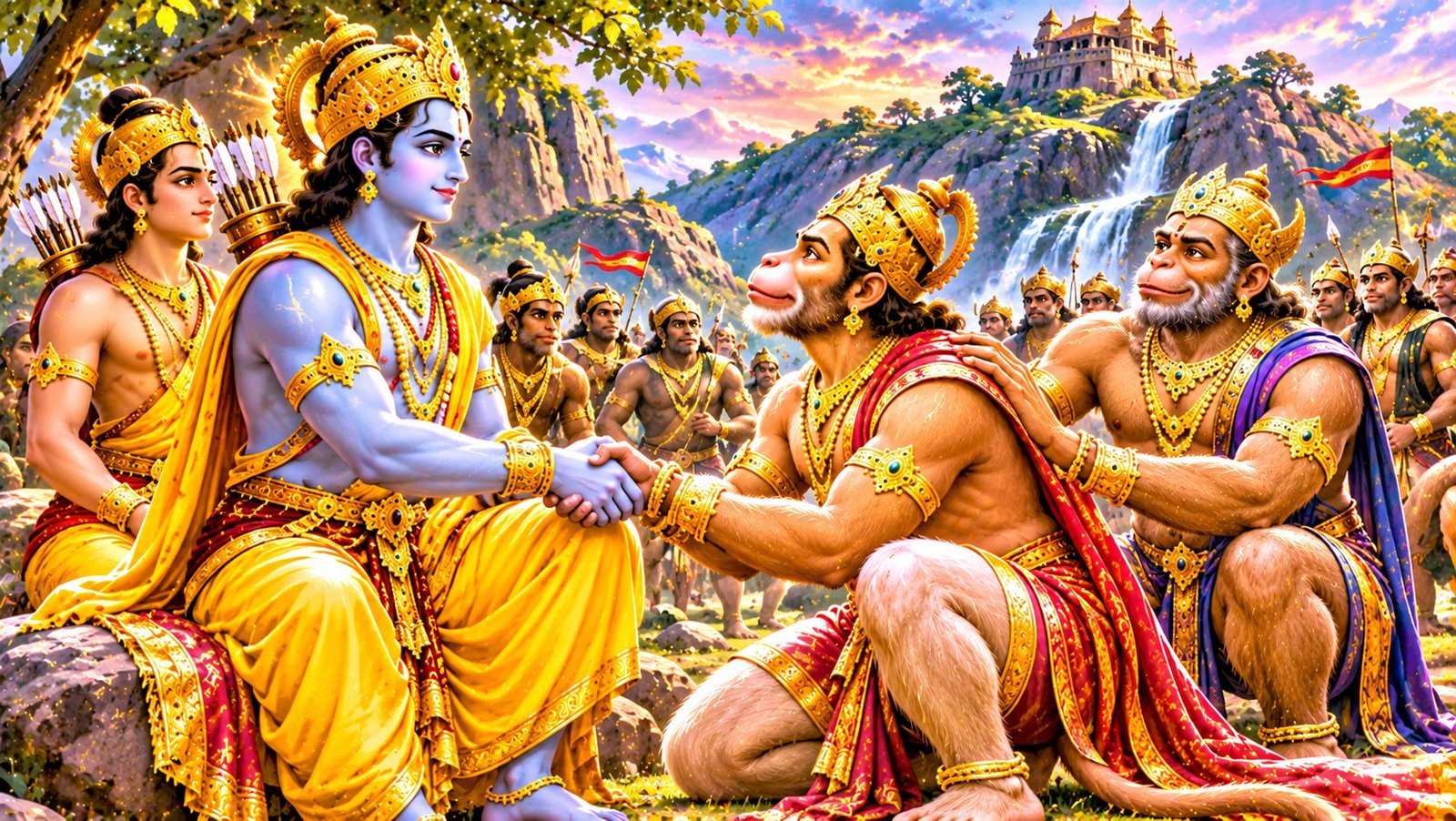
This Kanda shifts the story from solitary grief to collective effort. Rama and Sugriva form an alliance based on mutual help: Rama will assist Sugriva in recovering his position, and Sugriva will use the strength and reach of the vanara community to search for Sita.
Rama Meets Hanuman at Pampa
Sugriva sees the two princes approaching and fears that they may have been sent by his powerful brother Vali. He asks Hanuman to discover who they are. Hanuman approaches Rama and Lakshmana in the guise of an ascetic and speaks with courtesy, clarity and intelligence.
Rama is impressed by Hanuman's thoughtful speech and manner. Hanuman soon recognises their purpose and brings them to Sugriva. This first meeting introduces Hanuman not only as a figure of strength, but as a wise messenger whose judgment and communication help create trust.
The Pact of Friendship with Sugriva
Sugriva tells Rama about his conflict with Vali. He explains that a misunderstanding led Vali to drive him away from Kishkindha and take Sugriva's wife. Sugriva now lives in fear, protected by the fact that Vali cannot safely enter the region of Rishyamuka.
Rama and Sugriva pledge friendship before the sacred fire. Each promises to help the other. Sugriva shows Rama the ornaments that Sita dropped while being carried through the sky. Rama recognises them, and the search for Sita gains a tangible clue.
Sugriva's Story and the Conflict with Vali
Sugriva recounts the events that broke the relationship between the brothers. Vali pursued a powerful adversary into a cave and, after a long absence, Sugriva believed him dead when blood emerged from the entrance. He blocked the cave and returned to Kishkindha, where he was made king. Vali later returned, interpreted the act as betrayal and drove Sugriva away.
Rama listens and agrees to help Sugriva regain his position. Sugriva demonstrates Vali's strength, including the story of the demon Dundubhi and the great trees. Rama displays his own power, giving Sugriva confidence that the alliance is genuine.
The Fall of Vali and the Question of Dharma
Sugriva challenges Vali to a duel. During the first encounter Rama cannot clearly distinguish the brothers and does not release his arrow. In the next challenge Sugriva wears a garland so Rama can identify him. As the brothers fight, Rama shoots Vali with an arrow from concealment.
Wounded and near death, Vali questions Rama's action and challenges its justice. Rama answers by explaining his understanding of royal duty and Vali's conduct toward Sugriva. The exchange is important: the epic allows Vali's objection to be heard and presents Rama's response rather than treating the event as an uncomplicated victory.
Tara mourns Vali, and the succession is arranged. Sugriva is installed as king and Angada is honoured as the heir. Rama's assistance has restored Sugriva's position, but the emotional consequences of Vali's death remain part of the story.
The Rains, Sugriva's Promise and Lakshmana's Visit
Rama and Lakshmana wait through the rainy season while Sugriva returns to the responsibilities and comforts of kingship. As the months pass, Rama grows troubled that the search for Sita has not begun. Sugriva appears to have delayed the promise he made.
Lakshmana goes to Kishkindha in anger. Hanuman and Tara help calm the situation, and Sugriva recognises that he must fulfil his pledge. He summons the vanara leaders and organises search parties for the four directions.
The Search Parties and Rama's Ring
Sugriva sends groups of vanaras east, west, north and south, describing the regions they must explore. The southern party includes Angada, Hanuman and Jambavan. Before they depart, Rama gives Hanuman his signet ring so that Sita will recognise the messenger as one who comes from him.
The ring becomes a token of trust and identity. It will allow Hanuman to reassure Sita in Lanka and establish that Rama has not abandoned the search.
The Southern Search and the Cave of Svayamprabha
The southern party travels through difficult terrain and faces the possibility of failure. The vanaras enter a mysterious cave and meet Svayamprabha, who helps them emerge. Their time is running out, and Angada fears the consequences of returning without news.
The group reaches the seashore in despair. There they meet Sampati, the aged brother of Jatayu. When Sampati learns of Jatayu's death, he explains what he knows about Ravana carrying Sita to Lanka. His sight reveals that the island lies across the ocean.
Jambavan Reminds Hanuman of His Strength
The vanaras now know where Sita is, but the ocean presents an immense obstacle. Each member of the group speaks of the distance he can travel. Hanuman has not yet recognised the full extent of his own capacity.
Jambavan reminds Hanuman of the strength and abilities he possesses. Encouraged by this counsel, Hanuman grows in confidence and prepares to leap across the ocean. The Kanda ends at the threshold of this great undertaking, which becomes the central action of Sundara Kanda.
Key Characters and Teachings
Rama and Sugriva are joined by a pledge of mutual help. Hanuman emerges as a wise and devoted messenger; Jambavan is the elder whose counsel awakens courage; Angada carries responsibility during the search; and Sampati provides the crucial information that points toward Lanka. Vali and Tara bring the difficult questions of justice, grief and kingship into the narrative.
Kishkindha Kanda explores friendship built on promises, the responsibilities of leadership, the consequences of conflict, and the importance of wise counsel. It also shows that courage may need to be awakened by someone who sees a strength that the individual has forgotten.
Kishkindha Kanda in the Wider Ramayana
Kishkindha Kanda creates the alliance that makes the search for Sita a shared mission. Its final scene prepares directly for Hanuman's journey to Lanka in Sundara Kanda. The transition is from a small group searching in uncertainty to a determined messenger ready to cross the ocean.
This article follows the principal narrative of the Valmiki Ramayana. Later devotional and regional retellings may present particular scenes, dialogue and moral interpretations differently, especially the debate surrounding Vali's death.