
Sacred scriptures
Samaveda: Exploring the Sacred Melodies of Sanatan Dharma
Discover the Samaveda, the Veda of sacred melodies, its relationship with the Rigveda, the traditions of Vedic chanting, and its enduring spiritual significance.
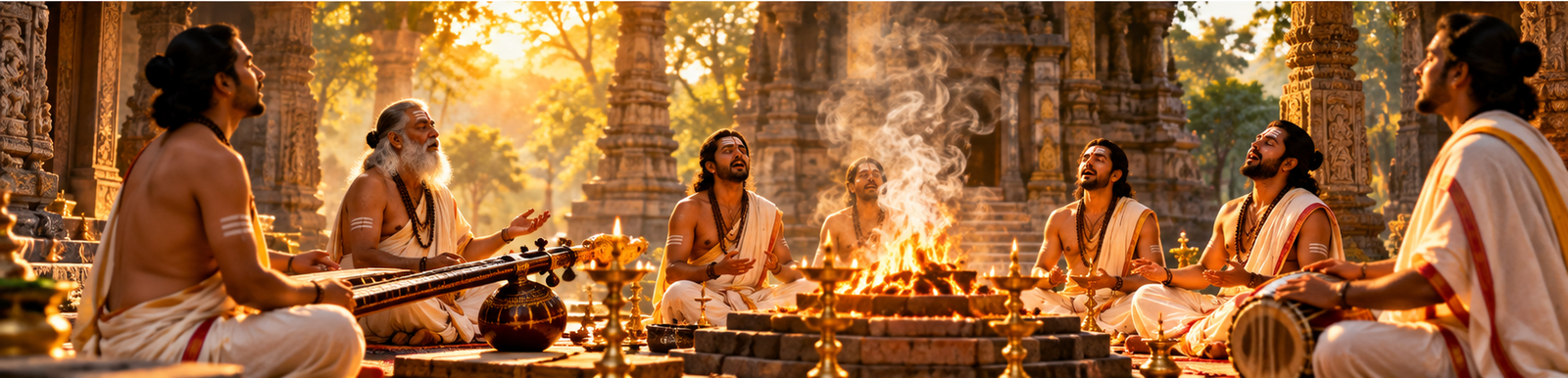
Introduction to the Samaveda
The Samaveda is one of the four Vedas, the foundational bodies of sacred knowledge in Sanatan Dharma. It is especially associated with musical chanting and the melodic presentation of sacred verses during Vedic rituals.
The word Samaveda is commonly understood through the ideas of saman, a chant or melody, and Veda, knowledge. Its distinctive contribution lies in how selected verses are arranged and sung as part of a disciplined tradition of sacred recitation.
The Relationship Between the Samaveda and Rigveda
Much of the Samaveda's verse material is also found in the Rigveda, although the texts serve different liturgical purposes. Verses drawn from the Rigveda are arranged for melodic chanting in the Samaveda tradition.
This relationship illustrates how Vedic literature preserves interconnected forms of sacred expression: the Rigveda is renowned for its hymns, while the Samaveda gives particular prominence to their musical and ritual performance.
Structure and Recitation
The Samaveda is traditionally organised into collections that guide the use and arrangement of its chants. Its recitation requires careful attention to pitch, pronunciation, rhythm, and the established rules of transmission.
Vedic chanting has been preserved through generations of oral teaching and disciplined practice. Different Samaveda traditions maintain their own arrangements and methods of recitation.
The Role of the Udgatri Priest
In the Soma sacrifice, the Udgatri priest and associated chanters have a specialised role in singing Samavedic chants. Their contribution forms part of a larger ritual tradition involving priests with distinct responsibilities.
The chants are not simply decorative music. Within their ritual setting, they are performed according to established conventions that connect sound, sacred text, offering, and ceremony.
Sacred Sound and Spiritual Practice
The Samaveda demonstrates the importance of sound in Vedic religious life. Precise recitation and melodic patterns help preserve the text and sustain a living tradition of oral learning.
For contemporary readers, the Samaveda offers an opportunity to explore how disciplined listening, vocal practice, attention, and reverence have shaped sacred traditions. Its historical ritual context should be understood alongside, rather than replaced by, modern interpretations of music or meditation.
Traditions of the Samaveda
The Kauthuma, Ranayaniya, and Jaiminiya traditions are important Samaveda recensional traditions. They preserve distinctive textual and chanting lineages, demonstrating the diversity within Vedic transmission.
The survival of these traditions reflects the work of teachers, students, ritual specialists, and communities who have maintained the discipline of Vedic recitation over many generations.
The Samaveda and Indian Musical Heritage
The Samaveda is frequently discussed in relation to the history of Indian musical thought because of its specialised use of melody and chant. This connection is an important subject of cultural and scholarly interest.
However, it is more accurate to understand the Samaveda first within its own Vedic and ritual setting than to describe it simply as the direct origin of every later Indian musical tradition.
Why the Samaveda Matters Today
The Samaveda remains valuable for understanding Vedic ritual, oral preservation, sacred sound, and the relationship between text and performance. Its chanting traditions also form part of India's intangible cultural heritage.
Studying the Samaveda encourages respect for precise transmission, patient learning, and the ways in which communities preserve knowledge through practice as well as written texts.
How to Begin Studying the Samaveda
Begin with a reliable introduction to the four Vedas and the role of the Samaveda in Vedic ritual. Then explore a trustworthy translation or scholarly overview that explains its organisation and relationship with the Rigveda.
When listening to recordings, prefer recognised Vedic recitation traditions and consult knowledgeable teachers for guidance on pronunciation and chanting. Keep historical description, traditional interpretation, and modern personal reflection clearly distinguished.
Understanding the Samaveda Samhita and Its Structure
The Samaveda Samhita is one of the four Vedas and is especially associated with melodic chanting during Vedic rituals. Much of its verse material is also found in the Rigveda, but the Samaveda arranges selected verses for a distinct liturgical purpose.
A central feature of the Samaveda is the relationship between sacred text, melody, and ritual performance. The verses are presented through established chanting traditions in which pitch, pronunciation, and melodic patterns are carefully transmitted.
The Samaveda is traditionally associated with the Udgatri priest, who sings the prescribed chants during the Soma sacrifice. This specialised role illustrates how Vedic rituals bring together different priests, each with particular duties.
The Kauthuma, Ranayaniya, and Jaiminiya traditions preserve important Samavedic recensional and chanting lineages. Their differences reflect the diversity of Vedic transmission and the importance of learning through recognised traditions.
The Samaveda is important for understanding Vedic chanting traditions and the history of sacred performance. Its relationship with later Indian musical traditions is a valuable subject of study, although it should not be simplistically described as the sole origin of all Indian music.
12. Structure of the Samaveda Samhita: Purvarchika and Uttararchika
The Samaveda Samhita is traditionally organised into two principal collections of verses called the Purvarchika and Uttararchika. Understanding these divisions helps readers appreciate how the Samaveda organises sacred verses for their distinctive role in Vedic chanting.
The Purvarchika is the earlier collection and includes groups of verses traditionally associated with Agni, Indra, and Soma Pavamana, along with other material. These groupings help readers recognise the ritual and devotional themes that shape the collection.
The Uttararchika forms the second major collection. Its verses are arranged in sequences associated with the performance of Samavedic chants. The precise arrangement and enumeration should be understood with reference to the particular recension being studied.
The terms Archika and Gana help explain two related aspects of the Samavedic tradition. The Archika preserves the verse collection, while the Gana texts provide arrangements for singing Samans. A verse and its melodic performance are closely connected, but they are not identical forms of textual material.
The Kauthuma, Ranayaniya, and Jaiminiya are three important Samaveda recensions. Their textual arrangements and chanting traditions preserve distinctive lineages of Vedic learning. Numerical details about verses and collections should therefore be attributed to a specific recension rather than presented as universal figures for every Samavedic tradition.
13. How Samavedic Chanting Works: Saman, Gana and Stobha
Samavedic chanting is a specialised form of Vedic recitation in which selected verses are performed according to established melodic and ritual conventions. A Saman is a sacred chant or melodic performance, and the Gana literature preserves arrangements used in singing these chants.
The relationship between a verse and its melody is an important feature of the Samaveda. A verse selected for melodic performance serves as the textual basis for a chant, while the Gana tradition guides how that chant is rendered. The same textual material can participate in different arrangements according to the relevant ritual and tradition.
Stobha syllables are distinctive syllables used within certain Samavedic chant arrangements. They can form part of the melodic performance rather than functioning as ordinary words in the underlying verse. Their use should be studied through recognised Gana texts and chanting traditions, because their placement and interpretation depend on context.
Some traditional descriptions of Saman performance identify stages such as Prastava, Udgitha, Pratihara, Upadrava, and Nidhana. These terms refer to parts of a structured ritual chant performance. Their precise roles should be explained in relation to the ritual and tradition being discussed rather than treated as a single universal musical formula.
The preservation of Samavedic chanting depends on attentive listening, careful pronunciation, disciplined practice, and oral instruction. Written texts are valuable, but the living recitation traditions also preserve details of melodic performance that cannot always be understood from the words alone.
14. Samaveda Chanting Traditions and Illustrative Examples
The Kauthuma, Ranayaniya, and Jaiminiya traditions are important branches of Samavedic transmission. Each preserves its own textual and recitational heritage, and their differences are valuable for understanding the diversity of Vedic oral learning.
Samavedic chants are closely connected with the Soma sacrifice, in which the Udgatri priest and associated chanters have specialised responsibilities. Their performance illustrates the coordinated nature of Vedic ritual, where different priests carry out distinct functions according to established procedures.
A useful example for comparative study is the opening Agni invocation, Agna a yahi vitaye, associated with Rigveda 6.16.10 and represented in Samavedic chanting traditions. Studying a verse alongside its Samavedic melodic arrangement helps readers see how the relationship between sacred text and chant works in practice. The precise notation and rendering should be checked against the relevant recension.
When comparing chant recordings, learners should identify the tradition and source of the recording wherever possible. Differences in melodic rendering do not automatically indicate an error; they may reflect distinct recensions, recitation lineages, or performance conventions.
The Samaveda is frequently discussed in connection with Indian musical heritage because of its specialised treatment of melody and sacred sound. Its historical significance should be explored carefully, without assuming that every later Indian musical form developed directly or exclusively from Samavedic chanting.
15. Samaveda and the Upanishads: From Chant to Philosophical Inquiry
The Samavedic tradition is associated not only with ritual chanting but also with important philosophical texts. The Chandogya Upanishad and the Kena Upanishad are traditionally connected with the Samaveda and offer valuable examples of reflection on sacred knowledge, consciousness, and the relationship between human understanding and ultimate reality.
The Chandogya Upanishad explores the significance of Om, sacred recitation, meditation, and the deeper meaning of existence. Its discussions show how ideas associated with Vedic chants can become subjects of philosophical inquiry. The text also develops teachings about the Self and Brahman that have been interpreted in different ways by Indian philosophical traditions.
The Kena Upanishad begins by asking what directs the mind, the senses, and the powers of life. Its questions invite readers to consider the source of perception and understanding rather than treating sensory experience as the complete explanation of reality.
These texts illustrate the breadth of the Samavedic heritage. The Samaveda Samhita has a distinctive place in ritual chanting, while the associated Upanishadic traditions explore philosophical questions about knowledge, consciousness, and the ultimate ground of experience.
Readers can continue their study through the Chandogya and Kena Upanishads and the Sanatan Secrets India guide to the Upanishads. Reading these texts alongside reliable translations and explanatory notes helps preserve the distinction between the original wording, traditional commentary, and modern interpretation.
Frequently Asked Questions About the Samaveda
What is the meaning of Samaveda? The name Samaveda is commonly associated with saman, meaning a chant or melody, and Veda, meaning knowledge. The text is especially known for its role in melodic Vedic recitation.
What is the difference between the Rigveda and Samaveda? The Rigveda is a collection of hymns, while the Samaveda arranges selected verses for chanting in particular ritual settings. Their relationship demonstrates the different functions of interconnected Vedic texts.
Why is the Samaveda associated with music? The Samaveda gives particular importance to melodic chanting and prescribed methods of performance. Its historical significance lies in its distinctive place within Vedic ritual and the preservation of oral traditions.
Who is the Udgatri priest? The Udgatri is the priest responsible for singing Samavedic chants during the Soma sacrifice, assisted by associated chanters within the wider ritual system.
What are the main traditions of the Samaveda? Kauthuma, Ranayaniya, and Jaiminiya are important Samaveda traditions. They preserve distinctive textual and recitational lineages.
How can beginners study the Samaveda? Begin with a reliable introduction to the Samaveda Samhita, then explore its relationship with the Rigveda and learn about recognised Vedic chanting traditions. Consult trustworthy editions and knowledgeable teachers when studying pronunciation and recitation.
Conclusion
The Samaveda holds a distinctive place among the four Vedas through its emphasis on sacred melody and ritual chant. Closely connected with the Rigveda yet organised for its own liturgical purposes, it reveals the care with which Vedic traditions preserved the spoken and sung word.
Exploring the Samaveda deepens our understanding of Sanatan Dharma's rich textual heritage and the enduring role of disciplined recitation in transmitting sacred knowledge.