
DEVOTIONAL LIBRARY
Shri Rama Stotras & Prayers
Explore devotional hymns and prayers dedicated to Shri Rama, with Sanskrit text context, Hindi explanations and meanings.
श्रीराम से संबंधित स्तोत्रों में धर्म, मर्यादा, करुणा, संरक्षण और आदर्श आचरण के भाव मिलते हैं। प्रत्येक रचना के पाठ और परंपरागत श्रेय को उसके अपने स्रोत के अनुसार समझना चाहिए।
About Shri Rama: Life, Trials and Timeless Teachings
Prince of Ayodhya: Duty Before Comfort
Shri Rama is one of the most beloved figures in Hindu tradition and is revered as an avatar of Vishnu. Born to King Dasharatha and Queen Kaushalya in Ayodhya, he grew up as a prince known for composure, courage, kindness and respect for his teachers and elders. Many devotees call him Maryada Purushottama—the exemplary person who upholds dharma, or righteous conduct, even when doing so brings personal hardship. Rama’s story is not simply about a prince who wins a kingdom; it is about the difficult choices through which duty, truth and compassion are tested.
When Rama was preparing for his coronation, a promise made by Dasharatha required the king to grant Queen Kaikeyi two boons. She asked that her son Bharata be crowned and that Rama spend fourteen years in forest exile. Rama accepted the decision rather than allow his father’s word to be broken or the kingdom to be thrown into conflict. Sita chose to accompany her husband, and Lakshmana joined them in the forest. Bharata, who had not sought the throne, later refused to rule as king in his own right and governed as Rama’s representative, keeping Rama’s sandals on the throne as a sign of fidelity.
Life in the Forest and the Search for Sita
The years in the forest brought both spiritual encounters and grave danger. After the abduction of Sita by Ravana, the ruler of Lanka, Rama’s grief became a determined search. He and Lakshmana met allies along the way, including the devoted vanara prince Sugriva. Rama helped Sugriva recover his position, and Sugriva’s community joined the search for Sita. These episodes show how the Ramayana’s journey depends on friendship, promises kept, and people of different backgrounds working together toward a shared purpose.
Hanuman became central to the search. Crossing the ocean to Lanka, he found Sita in the Ashoka grove, delivered Rama’s message and gave her hope. His courage and discernment make the Sundara Kanda especially cherished by many readers. Hanuman’s devotion is also a reminder that service in Rama’s story is not measured by status, but by sincerity, wisdom and willingness to act for another’s good.
The Bridge to Lanka and the Return to Ayodhya

With allies gathered, Rama’s forces built a crossing toward Lanka and fought Ravana’s army. The battle included sacrifice and loss, and Lakshmana was gravely wounded before Hanuman brought the life-restoring herb described in the tradition. Rama ultimately defeated Ravana and Sita was reunited with him. The Ramayana presents the victory as the defeat of a powerful adversary whose pride and desire had led him away from righteousness; it also invites readers to reflect on the cost of conflict and the responsibilities that accompany victory.
After the exile ended, Rama, Sita and Lakshmana returned to Ayodhya, where Rama’s coronation was celebrated. The ideal of Rama Rajya—Rama’s just rule—has come to symbolize a society aspiring to fairness, public welfare, responsible leadership and the protection of the vulnerable. Different Ramayana traditions tell some later events differently, so a careful reader should distinguish the account being followed rather than assume every retelling is identical.
A Living Tradition of Stories, Worship and Festivals
The ancient Sanskrit Ramayana attributed to Valmiki is widely known as the Adi Kavya, or first epic poem, and is organized into kandas, or books. The story has also been retold in many Indian languages and artistic traditions. Tulsidas’s Ramcharitmanas, composed in Awadhi, is one of the most influential devotional tellings in North India. The Adhyatma Ramayana and other regional versions offer further theological and literary perspectives. These works share central figures and events while differing in language, emphasis and details.
Rama is commonly depicted with a bow and arrows, often beside Sita and Lakshmana, with Hanuman kneeling in devotion. Rama Navami celebrates his birth and is observed with prayer, readings and devotional singing. Dussehra commemorates Rama’s victory over Ravana in many traditions, while Diwali is associated in popular North Indian tellings with the return of Rama, Sita and Lakshmana to Ayodhya. The Ram Raksha Stotram, Shri Ramachandra Kripalu Bhajman and other prayers express trust in Rama’s protection, beauty and compassion. The Aditya Hridayam, taught to Rama by the sage Agastya in the battlefield episode of the Valmiki Ramayana, is another celebrated hymn associated with courage and resolve.
For devotees, remembering Rama can be both worship and a practical reflection: keep one’s word where possible, act with courage without cruelty, listen before judging, care for family and community, and use power responsibly. These ideals are not always easy to fulfil; that is precisely why Rama’s difficult choices continue to invite study, discussion and prayer.
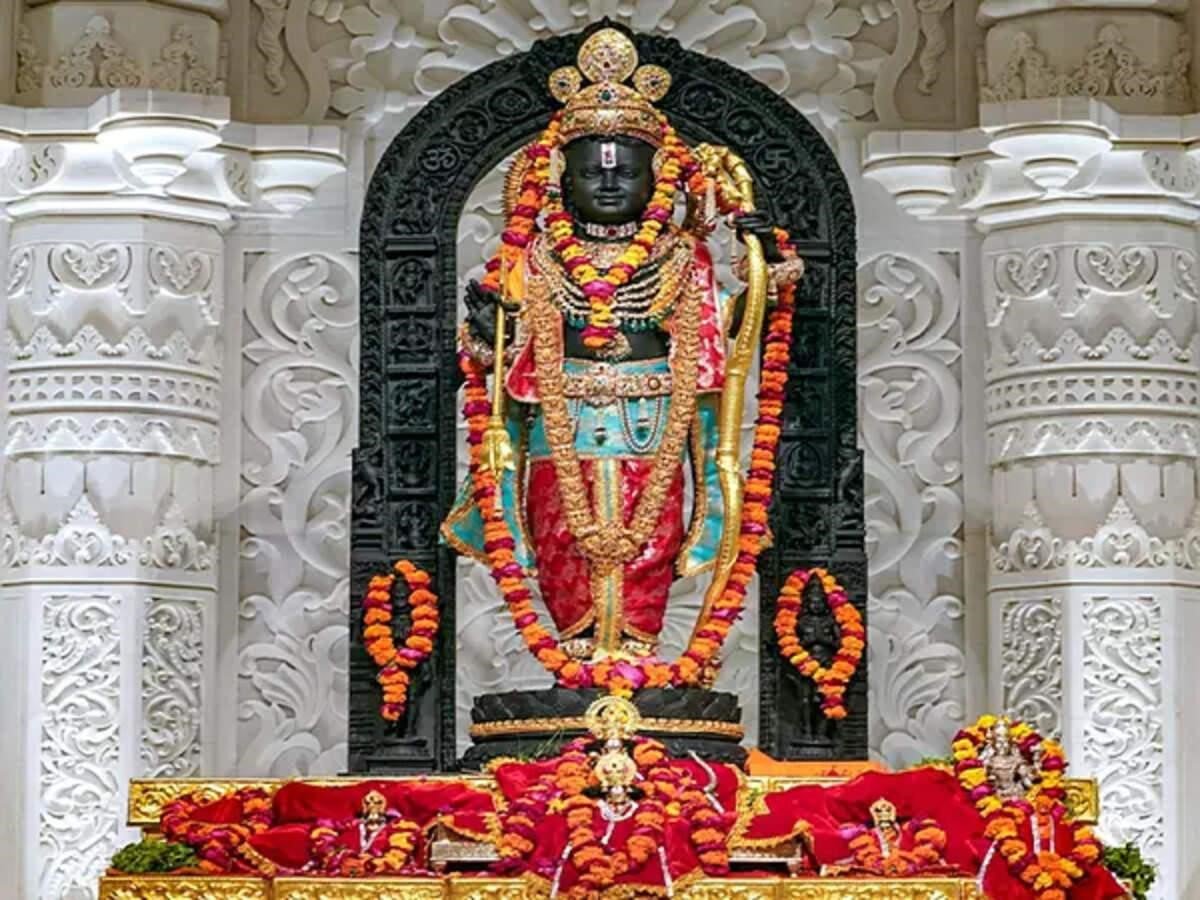
Ram Raksha Stotram
A Sanskrit hymn traditionally associated with Budha Kaushika and devoted to Shri Rama.
Read full articleShri Ramachandra Kripalu Bhajman
A beloved devotional hymn praising Rama’s compassion, beauty and grace, traditionally associated with Tulsidas.
Read full articleShri Ram Stuti
A prayer of praise to Shri Rama, exploring devotion, humility and refuge in the Lord.
Read full articleRam Naam Mantra
Explore the devotional practice of repeating Shri Ram’s sacred name, including the mantra Shri Ram Jai Ram Jai Jai Ram.
Read full article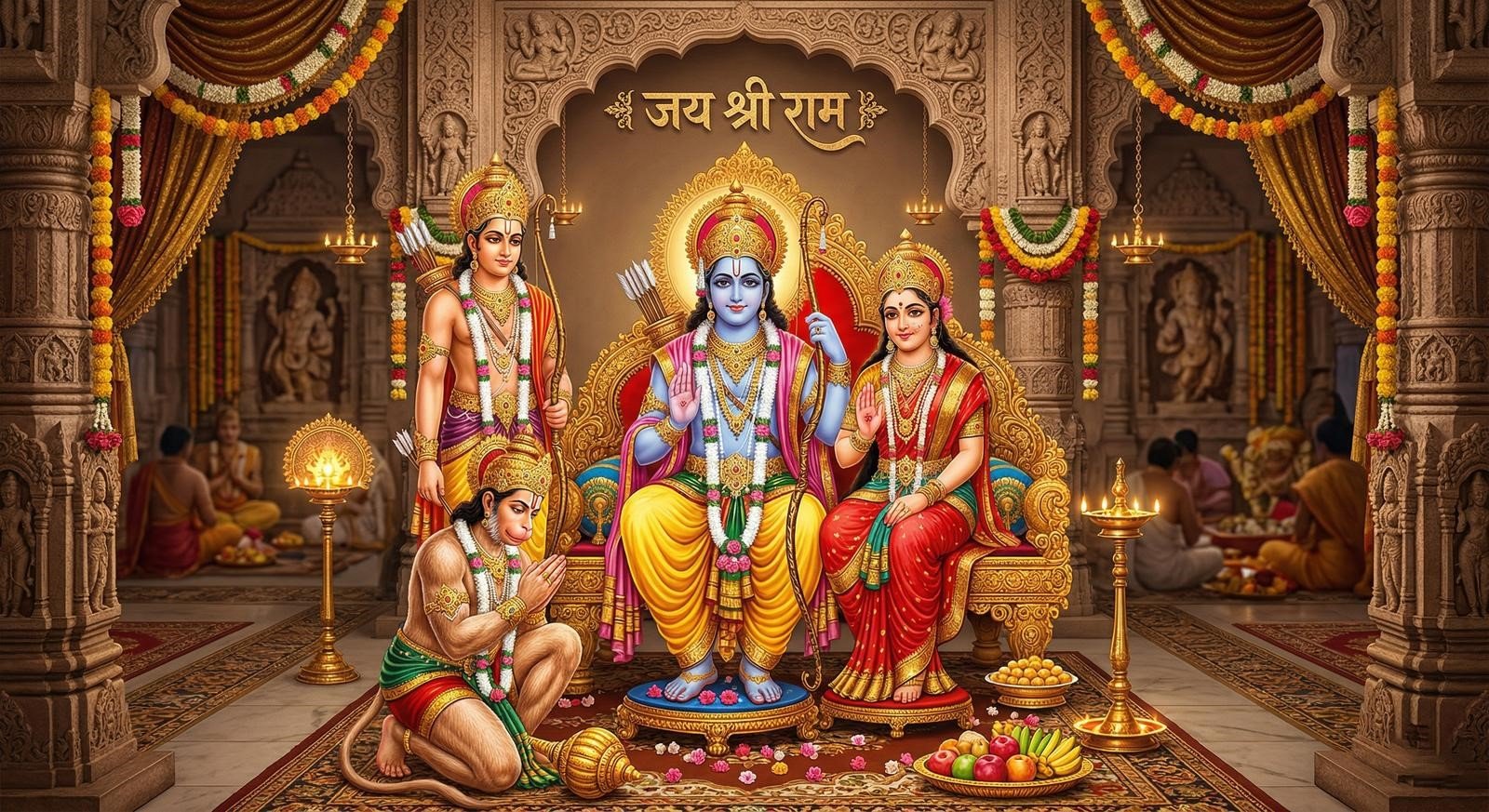
Sita Ram Naam Jap
A simple name-remembrance practice honoring Sita and Rama together in devotion.
Read full articleRama Ashtakam
An eight-verse hymn in praise of Shri Rama; wording and attribution can vary by tradition.
Read full articleRam Chalisa
A forty-verse devotional composition praising Shri Rama; consult a trusted edition for the version followed.
Read full articleRam Navami Vrat Katha
A devotional account associated with the observance of Rama Navami and the birth of Shri Rama.
Read full articleRam Satsai
Selected devotional couplets on Rama-bhakti, with attention to the particular edition and attribution.
Read full articleRama Ashtottara Shatanamavali
A litany of 108 names of Shri Rama, recited in worship according to the devotee’s tradition.
Read full articleRama Dwadasha Nama Stotram
A prayer centered on twelve sacred names of Shri Rama, with transliteration and meaning.
Read full articleRama Gayatri Mantra
A Rama-focused Gayatri mantra with Sanskrit text, transliteration and a careful explanation of variants.
Read full articleRama Hridayam
A devotional text reflecting on Rama’s spiritual significance; related traditions and versions should be distinguished.
Read full articleRama Kavacham
A protective hymn invoking Shri Rama, presented with source-aware notes and devotional meaning.
Read full articleRama Mangalashtakam
A set of auspicious verses praising Shri Rama, often recited in devotional settings.
Read full articleShri Rama Panchakam
A five-verse prayer in praise of Shri Rama; the exact text may differ among traditions.
Read full article